
Legal Formalities After Death in India: A Simple Step-by-Step Guide for Families


Losing a loved one is emotionally overwhelming, and handling legal responsibilities during such a time can feel difficult. Knowing the legal formalities after death in India helps families take the right steps without delays, ensuring smooth documentation, asset transfer, and financial settlements. Understanding the legal formalities after death in India helps families take the right steps without delays. From obtaining a death certificate to arranging dead body transport and funeral services in Kolkata, each step plays a crucial role in ensuring a smooth and respectful process.
Quick Overview
Legal formalities after death in India include:
Obtaining a Medical Certificate of Death
Registering the death within 21 days
Applying for the Death Certificate
Securing identity and financial documents
Applying for Legal Heir / Succession Certificate
Transferring assets, bank accounts, and property
Step-by-Step Legal Process After Death in India

1. Medical Certificate of Cause of Death
A certified doctor or hospital issues this document confirming the cause of death. This is the first and most essential step.
2. Death Registration (Within 21 Days)
The death must be registered at the local municipal authority.
It is legally mandatory in India
Late registration may involve penalties
For official guidelines and to register a death online, you can also visit the Government of India's Civil Registration System (CRS) portal, which provides authentic information and registration services across India.
3. Obtain Official Death Certificate
This is the most important legal proof required for the following:
Insurance claims
Bank account closure
Property and asset transfer
4. Inform Banks & Government Authorities
Notify relevant institutions to avoid misuse and begin formal processes:
Banks and financial institutions
PAN and Aadhaar authorities
Pension or employment offices
5. Apply for Legal Heir or Succession Certificate
Legal Heir Certificate → For basic claims like pension, utility transfers
Succession Certificate → Required for legal asset transfer via court
6. Transfer Assets & Close Liabilities
This step includes:
Property ownership transfer
Insurance claim settlements
Clearing loans and outstanding liabilities
Common Legal Documents Required After Death
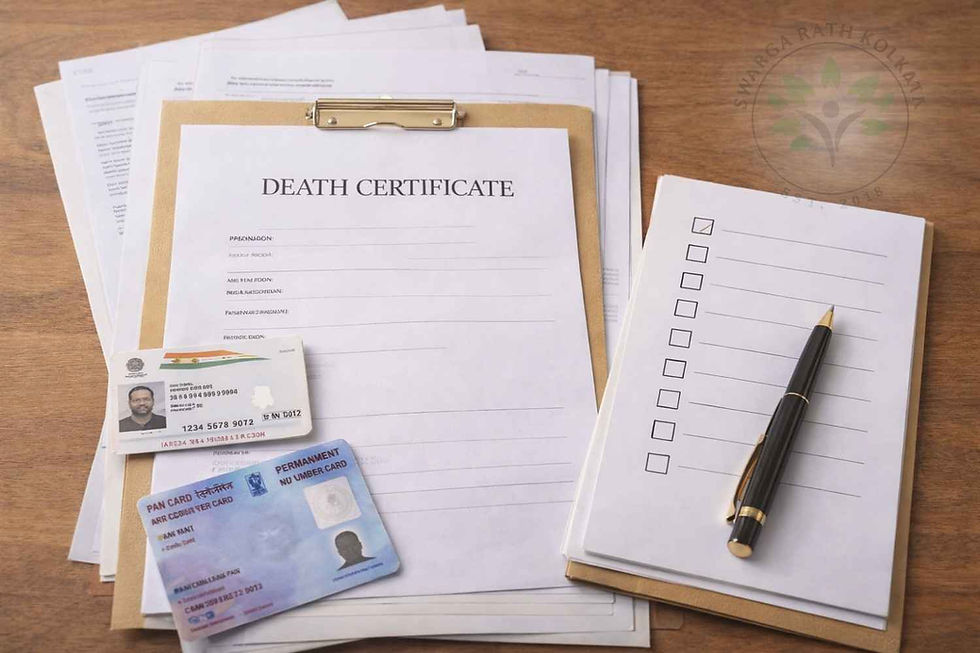
Death Certificate
Aadhaar & PAN of the deceased
Address proof
Legal heir certificate
Will (if available)
Legal Heir Certificate vs Succession Certificate
Understanding the difference between a legal heir certificate and a succession certificate is important for handling assets and legal claims after death in India.
Purpose
• Legal Heir Certificate: Identifies legal heirs of the deceased
• Succession Certificate: Grants authority to claim assets
Issued By
• Legal Heir Certificate: Municipality / Tehsildar
• Succession Certificate: Civil Court
Usage
• Legal Heir Certificate: Pension, utility transfer, basic claims
• Succession Certificate: Bank balance, property, investments
Legal Strength
• Legal Heir Certificate: Limited legal validity
• Succession Certificate: Strong legal authority
Time Required
• Legal Heir Certificate: Few days to weeks
• Succession Certificate: Longer court process
In simple terms: A legal heir certificate is used for identification purposes, while a succession certificate is required to legally claim financial assets.
Frequently Asked Questions:
Q. What is the 40-day rule after death?
Ans. It refers to religious rituals followed in some communities. It has no legal significance.
Q. How soon should death be registered in India?
Ans. Within 21 days to avoid penalties and legal complications.
Q. Who is considered a legal heir in India?
Ans. Generally, spouses, children, and parents are primary legal heirs.
Q. Can bank money be withdrawn after death?
Ans. Yes, but only by nominees or legal heirs after submitting valid documents.
Q. What happens if there is no will?
Ans. Assets are distributed as per applicable succession laws like the Hindu Succession Act.
Q. Is a death certificate mandatory for all legal work?
Ans. Yes, it is the primary document required for all claims and transfers.
Q. How many death certificates should be taken?
Ans. It is advisable to collect multiple copies (5–10) for different legal uses.
Q. What is the difference between a nominee and a legal heir?
Ans. A nominee is a temporary custodian, while the legal heir is the rightful owner of assets.
People Also Search For
When dealing with legal formalities after death in India, families often look for these important related processes:
Procedure After Death in Hospital in India
Understand the step-by-step process followed in hospitals, including medical certification, body release, and initial documentation.
Legal Steps After Sudden Death in Family
Learn what immediate legal actions to take in case of an unexpected death, including police procedures and documentation requirements.
Documents Required After Death in India
A complete checklist of essential documents needed for legal claims, bank work, and property transfer.
Property Transfer After Death Without Will
Know how assets are legally distributed when no will is present and what procedures heirs must follow.
Death Certificate Process in India
Detailed guidance on how to apply, timelines, and where to obtain official death certificates.
Common Mistakes to Avoid
Delaying death registration
Not collecting multiple copies of the death certificate
Ignoring nominee details in bank accounts
Skipping the legal heir or succession certificate
Compassionate Support When You Need It Most
At Swarga Rath Kolkata, we understand how difficult this time can be. Our team provides complete funeral and legal assistance support, ensuring every step is handled smoothly and respectfully.
✔ Death certificate guidance
✔ 24/7 dead body transport service
✔ Complete funeral and last rites assistance
Call Now: +91 8582889996 (24/7 immediate assistance). Get complete support within 30 minutes across Kolkata.


Comments