
How to Arrange a Pandit for a Funeral in Kolkata: A Bengali Hindu Family Guide


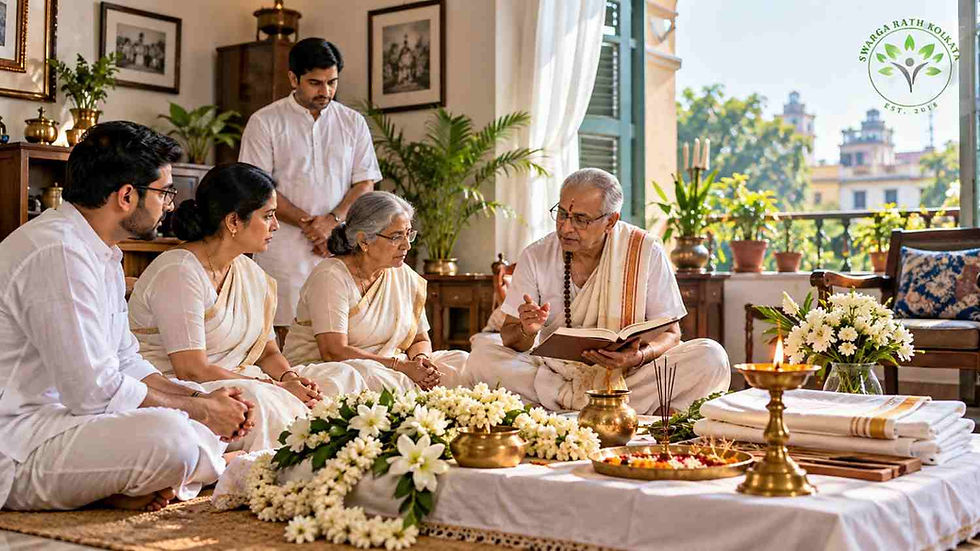
When a family loses a loved one, arranging a suitable pandit or purohit can be an important part of organising the funeral according to the family's religious and cultural traditions. In Kolkata, families may need assistance with Antim Sanskar, pre-cremation prayers, cremation-related rituals and subsequent ceremonies such as Shraddha.
To arrange a pandit for a funeral in Kolkata, first contact your family's regular priest if you have one. If not, ask a funeral service provider or a trusted local religious contact to help find a pandit experienced in your family's tradition. Before confirming, discuss availability, the rituals required, samagri (ritual materials), fees, travel and coordination with the cremation schedule.
This guide explains how to choose a suitable Bengali Hindu funeral pandit, what to clarify before booking and how to coordinate the religious and practical arrangements respectfully.
How Can You Arrange a Funeral Pandit in Kolkata?
You can arrange a funeral pandit in Kolkata through your family's regular purohit, a trusted local religious contact or a funeral service provider that assists with Hindu last rites. The most suitable option depends on your family's customs, the rituals required, the location and the priest's availability.
Option | When it may be suitable | What to confirm |
The family's regular pandit or purohit | The family already has an established religious guide. | Availability, travel and timing |
Local purohit or community priest | The family wants someone familiar with its Bengali or regional traditions. | Experience with the required rituals |
Funeral service provider | The family needs help coordinating the pandit alongside other funeral arrangements. | Priest availability, service inclusions and total charges |
Trusted referral from relatives or community members | The family wants a recommendation from someone familiar with its customs | Suitability, availability and clear pricing |
If your family already has a preferred pandit, it is generally sensible to contact them first. If a priest is unavailable, explain the family's requirements to an alternative provider rather than assuming that every priest follows exactly the same customs.
Swarga Rath Kolkata can help coordinate Pandit Ji or Purohit assistance for Hindu last rites, subject to availability and the family's requirements. Families can also discuss related arrangements through the Hindu Last Rites and Antim Sanskar services page.
What Does a Funeral Pandit Help With?
A funeral pandit or purohit provides religious guidance for the ceremonies agreed upon with the family. The exact role depends on the family's tradition, the priest's practice and the scope of the booking.
Type of assistance | What it may involve |
Religious guidance | Explaining the relevant procedures and family customs |
Antim Sanskar | Guiding the family through the agreed last rites |
Mantras and prayers | Reciting or guiding the prayers associated with the ceremony |
Pre-cremation rituals | Advising on applicable rites before the cremation |
Ritual samagri | Providing a list of required materials or helping arrange them |
Cremation-related guidance | Coordinating the religious portion of the ceremony with the family |
Post-cremation guidance | Advising on Asthi-related ceremonies, Pind Daan, Tarpan or Shraddha, where applicable |
These are possible areas of assistance, not a fixed package of rituals that every family must follow. Confirm the scope directly with the pandit.
Bengali Hindu Funeral Customs: What Should Families Discuss?
Bengali Hindu funeral customs can vary according to family tradition, community practice, religious guidance and personal preference. Academic research on Hindu death ceremonies and mourning rituals in India also discusses how these practices differ across communities and regions.
A family should not feel that it must follow an unfamiliar ritual simply because it appears in a general guide. When speaking to a pandit, explain the customs your family follows and ask which arrangements are appropriate for the ceremony.
1. Antim Sanskar and pre-cremation arrangements
Antim Sanskar refers to the final rites associated with death. Depending on the family's tradition, the priest may guide prayers, mantras and other religious procedures connected with the funeral.
The family should confirm which rituals are required, who will guide them and whether any specific materials must be prepared before the ceremony.
2. Mukhagni and cremation-related customs
Mukhagni is associated with the ritual lighting of the funeral pyre in Hindu cremation traditions. The details and responsibilities involved can vary.
Discuss the expected procedure with the family's pandit rather than relying on a generalised rule about which relative must perform a particular act. Families should communicate their circumstances and preferences to the priest.
3. Asthi Sanchay and Asthi Visarjan
Some families arrange the collection of cremated remains, followed by Asthi Visarjan according to their customs and practical arrangements.
Ask the pandit which guidance is needed, whether any ritual materials are required and whether a separate arrangement should be made after cremation.
4. Pind Daan, Tarpan and Shraddha
Pind Daan, Tarpan and Shraddha are among the ceremonies that some Hindu families observe after death. Their timing, procedure and significance may differ across traditions.
If your family requires any of these ceremonies, discuss them during the initial conversation with the pandit. This helps avoid confusion about whether the original booking covers only the funeral or also later ceremonies.
For a more detailed explanation of the sequence of Bengali Hindu funeral customs, read our guide to Bengali funeral rites after death.
How to Choose the Right Bengali Funeral Pandit

The right pandit is someone who understands the family's requirements, communicates clearly and is available for the agreed arrangements. A family does not necessarily need the most elaborate service; it needs appropriate religious guidance and a clear understanding of what will be provided.
Use the following checklist when comparing options.
What to check | Question to ask |
Familiarity with Bengali customs | Have you guided families through the specific rituals we require? |
Availability | Can you attend at the required time and location? |
Ritual scope | Which ceremonies are included in your service? |
Samagri | Will you bring the materials, provide a list or help arrange them? |
Language and communication | Can you explain the procedures in Bengali or another language the family understands? |
Cremation coordination | Can you coordinate your arrival and the religious procedures with the planned schedule? |
Fees | What is included in the quoted amount, and what may cost extra? |
Subsequent ceremonies | Can you advise us about later rituals if our family observes them? |
Do not assume that a priest's availability, fee or included materials are standard across Kolkata. Confirm these details individually before booking.
What Is the Difference Between Booking a Pandit Directly and Through a Funeral Service Provider?
Both options can work. The main difference is whether the family coordinates the religious arrangements independently or asks a provider to help coordinate them alongside other funeral requirements.
Consideration | Booking a pandit directly | Coordinating through a funeral service provider |
Main contact | The family communicates with the pandit. | The family communicates with the provider and, where necessary, the pandit. |
Ritual requirements | Discussed directly with the priest | Communicated through the provider and confirmed with the priest |
Samagri | Arranged as agreed with the priest | May be coordinated if included in the agreed service |
Funeral transport | Usually arranged separately unless agreed otherwise | May be coordinated alongside transport services |
Cremation timing | The family coordinates the schedule. | The provider may assist with practical coordination. |
Charges | Confirm the pandit's fee and any additional costs. | Request an itemised quote showing the included services |
A funeral service provider does not replace the religious judgement of the family's priest. Its role is to help coordinate the practical arrangements according to the family's instructions and the services agreed upon.
How to Arrange a Pandit Around Cremation Timing in Kolkata
When a funeral involves a cremation ground, timing and communication are important. Families should coordinate the expected arrival of the pandit with the transport arrangements and the cremation schedule.
The following steps can help.
Step 1: Confirm the cremation arrangements. Identify the intended cremation ground and clarify the applicable booking, entry and timing requirements with the relevant authority. You can consult the Kolkata Municipal Corporation's official list of crematoriums to find listed cremation facilities and contact details.
Step 2: Explain the family's ritual requirements. Tell the pandit which ceremonies are expected before or during the cremation. Ask whether any preparations must be completed beforehand.
Step 3: Confirm the location and reporting time. Share the correct address, a family contact number and the expected schedule. Allow for travel and possible delays.
Step 4: Coordinate transport and other practical arrangements. If a hearse van, funeral helpers or other services are required, confirm their arrival and responsibilities separately or through the agreed coordinator.
Step 5: Keep one family contact person informed. Designating one person to communicate changes can reduce confusion during a difficult time.
Families considering cremation grounds such as Keoratala or Nimtala should verify current arrangements and requirements directly with the relevant authority. Do not assume that the same procedures or timings apply at every location.
What Is Antim Sanskar Samagri, and Who Arranges It?

Antim Sanskar Samagri means the ritual materials used for the relevant Hindu last rites. The required items depend on the ceremonies planned and the instructions of the pandit.
Some families prefer the priest to bring the materials, while others arrange them independently or request help from a funeral service provider.
Before booking, ask for a clear list rather than purchasing a generic kit that may contain unnecessary items.
Question | Why it matters |
Which items are required? | Prevents confusion about what to prepare |
Who will supply them? | Clarifies responsibilities |
Are materials included in the quoted fee? | Helps avoid unexpected costs |
Are additional items needed for later ceremonies? | Separates immediate requirements from future arrangements |
The family should follow the guidance of its chosen pandit regarding the materials appropriate to its customs.
What Questions Should You Ask Before Booking a Funeral Pandit?

Before confirming a booking, ask the following questions. These are especially useful when arrangements must be made at short notice.
Are you available at the required time and location?
Are you familiar with our family's Bengali Hindu customs?
Which rituals will you conduct or guide?
Do you provide the required samagri, or should we arrange it?
What is your total fee, and what does it include?
Are travel, waiting time or additional ceremonies charged separately?
Can you coordinate your arrival with the planned cremation schedule?
Can we contact you later if our family requires guidance for Asthi Visarjan or Shraddha?
Once the arrangements are confirmed, keep the agreed details in writing where possible. This can help family members understand the scope of the service without repeated conversations.
Can Swarga Rath Kolkata Help Arrange a Pandit for Hindu Last Rites?
Swarga Rath Kolkata assists families with Hindu last rites and related funeral arrangements, including coordination of Pandit Ji or Purohit support according to the family's requirements and availability.
Depending on the arrangements requested, families can discuss:
Coordination of a pandit for Antim Sanskar.
Assistance with Antim Sanskar Samagri arrangements.
Hearse van and funeral transportation requirements.
Practical coordination around the planned cremation.
Guidance on arranging related post-cremation ceremonies.
The precise scope depends on availability and the agreed service. Confirm the rituals, materials, timing and charges before proceeding.
To learn more, visit our Hindu Last Rites and Antim Sanskar service page.
Families who need a broader overview of the practical steps involved can also read our guide to arranging a funeral in Kolkata.
Frequently Asked Questions
1. How can I find a pandit for a funeral in Kolkata?
Start with your family's regular pandit or a trusted community contact. If neither is available, ask a funeral service provider whether it can coordinate a suitable priest. Confirm the required customs, availability, materials and fees before booking.
2. Can I arrange a Bengali pandit for Antim Sanskar at short notice?
Short-notice arrangements may be possible, depending on the priest's availability, location and timing. Explain your requirements clearly and confirm the booking before relying on it.
3. Can a funeral service provider arrange both a pandit and a hearse van?
A provider may be able to coordinate both services, depending on its available services and arrangements. Confirm whether each service is included in the quote or billed separately.
4. Does every Bengali Hindu family follow the same funeral rituals?
No. Customs can vary according to family tradition, community and religious practice. Families should communicate their requirements to their chosen pandit rather than assuming that one sequence applies universally.
5. Who arranges Antim Sanskar Samagri?
The pandit may provide the materials, give the family a list or help arrange them. The family should confirm what is included in the booking and what must be purchased separately.
6. Can we use our own family priest?
Yes. Families can generally choose to involve their own priest. If a funeral service provider is coordinating other arrangements, inform the team so that transport and timing can be planned around the family's chosen priest.
7. Can the same pandit guide post-cremation rituals?
Some priests can advise on subsequent ceremonies, depending on their practice and availability. Ask about Asthi-related rituals, Pind Daan, Tarpan or Shraddha separately and confirm any additional fees.
8. How much does it cost to arrange a funeral pandit in Kolkata?
The cost depends on the rituals requested, the priest's travel, samagri, timing and whether additional ceremonies are included. Request an itemised quote rather than relying on an unverified standard price.
9. Does the pandit decide which rituals the family must perform?
The pandit provides religious guidance based on the family's tradition and the ceremonies discussed. Families should explain their circumstances and preferences and ask the priest to clarify the customary options.
10. Can a pandit be arranged for a cremation at Keoratala or Nimtala?
You can enquire about arranging a pandit for a funeral involving these cremation grounds. Confirm the priest's availability and the applicable arrangements with the relevant cremation-ground authority. Do not assume that a booking or ritual arrangement is automatically confirmed.
Final Thoughts

Arranging a funeral pandit in Kolkata is easier to coordinate when the family first identifies its religious requirements, confirms the priest's availability and clarifies who will provide the necessary ritual materials.
A family's own purohit can be a useful first contact. When that is not possible, a trusted local referral or a funeral service provider may help coordinate the arrangements. The key is to communicate the family's customs clearly and confirm the timing, responsibilities and charges before the ceremony.
Swarga Rath Kolkata can assist families in coordinating Hindu last rites and related funeral arrangements according to their requirements and service availability. The aim is to help families manage the practical details respectfully while allowing them to follow their own traditions.


Comments