
Step-by-Step Bengali Hindu Funeral Rituals After Death in Kolkata


Bengali funeral rituals in Kolkata typically include cremation (Antyeshti), Mukhagni, Ghat Kaaj on the 11th day, Shradhho on the 12th day, and Ashpanna on the 13th day. These rituals help families honor the departed soul while observing traditional Bengali Hindu mourning customs.
These rituals are not only religious practices but also emotional and cultural traditions passed down through generations.
What Happens Immediately After Death in a Bengali Hindu Family?
After a person passes away, close family members gently bathe the body and dress the deceased in clean white clothes. Flowers, tulsi leaves, sandalwood paste, and sacred items are placed near the body while prayers and mantras are recited. Once relatives and close friends have paid their respects, the deceased is traditionally taken to the cremation ground for the final journey.
Traditionally:
The body is kept at home for relatives and friends to pay their last respects.
Family members avoid loud activities and maintain a peaceful environment.
Preparations begin for the final journey to the cremation ground.
In Bengali culture, white clothing symbolizes purity and mourning. Close family members, especially sons and daughters, usually begin wearing simple white clothes after the cremation ceremony.
In some situations, family members living outside Kolkata may need additional time to arrive before the last rites are performed. During such circumstances, properly preserving the body respectfully may become necessary.
Cremation Rituals and the Importance of Mukhagni
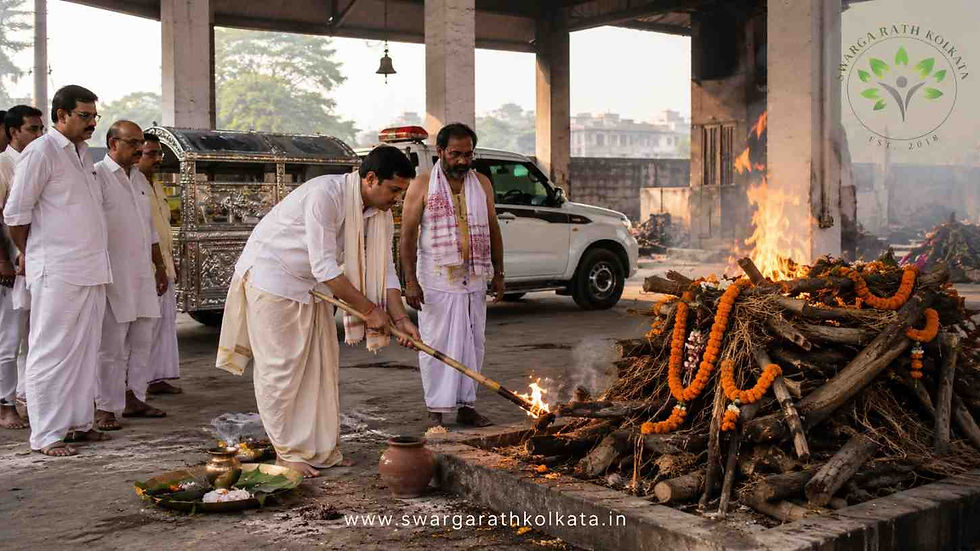
What is Mukhagni?
Mukhagni is one of the most important Bengali Hindu funeral rituals performed during cremation. Traditionally, the eldest son or chief mourner lights the funeral pyre as a final act of duty and respect toward the departed soul.
This ritual symbolizes the following:
The soul’s separation from the physical body
Acceptance of life and death
Spiritual liberation according to Hindu beliefs
During cremation:
Priests chant sacred mantras
Family members offer prayers
The chief mourner performs ritual circumambulation around the body before Mukhagni
In Kolkata, many Bengali Hindu families perform cremation at Nimtala, Keoratala, or Siriti crematoriums. While this article focuses on Bengali Hindu customs, funeral traditions can vary significantly across different faiths and communities in the city.
Why Do Bengali Families Wear White After Cremation?
After cremation, close family members traditionally wear plain white clothing throughout the mourning period.
Significance of White Dress in Bengali Mourning Rituals
White represents:
Simplicity
Detachment from worldly pleasures
Respect for the departed soul
Spiritual purity during mourning
During these days, families usually:
Avoid celebrations and social gatherings
Follow vegetarian food habits
Refrain from religious festivities or auspicious ceremonies
The mourning period is observed with emotional restraint, prayer, and remembrance.
11th Day Ritual: Ghat Kaaj

What is Ghat Kaaj?
Ghat Kaaj is generally performed on the 11th day after death in Bengali Hindu traditions. The family gathers at a riverbank or ghat with a priest to perform purification rituals for the departed soul.
How is Ghat Kaaj performed?
During this ritual:
Sacred prayers and offerings are made
Ritual shaving may be performed by male family members in some traditions
Family members pray for peace and spiritual purification
Offerings are made near holy water, especially the Ganga
Ghat Kaaj marks an important spiritual transition in the mourning process. Since many Bengali families traditionally perform Asti Bisarjan in the Ganga, readers may also find it useful to learn about ongoing conservation efforts for the river through the official resources of the Government of India.
12th Day Ritual: Shradhho Ceremony

What is Shradhho?
The Shradhho ceremony is usually observed on the 12th day after death. It is one of the most significant Bengali funeral rituals performed to honor the memory of the deceased.
Rituals Followed During Shradhho
Priests conduct Vedic rituals and mantra chanting
Food offerings and prayers are dedicated to the departed soul
Relatives and close community members gather for remembrance
Donations and charitable acts may also be performed
Families pray for the soul’s peace, blessings, and spiritual liberation.
13th Day Ritual: Ashpanna
What is Ashpanna?
Ashpanna is traditionally observed on the 13th day and marks the conclusion of the mourning period in many Bengali Hindu families. For families with young children, the mourning period often brings questions about how to explain loss and grief in a gentle and age-appropriate way.
Importance of Ashpanna
This ritual symbolizes the following:
Completion of formal mourning
Gradual return to daily life
Spiritual closure for the family
On this day:
Family members may prepare a simple meal
Relatives gather together in remembrance
The household slowly resumes regular routines
Ashpanna carries emotional importance because it represents healing, remembrance, and acceptance after loss.
FAQs About Bengali Funeral Rituals in Kolkata
How many days is mourning observed in Bengali Hindu traditions?
Most Bengali Hindu families observe a 13-day mourning period after death.
What is Asti Bisarjan in Bengali Hindu traditions?
Asti Bisarjan is the ritual immersion of ashes collected after cremation. Many Bengali Hindu families immerse the ashes in the Ganga or another sacred river while offering prayers for the peace of the departed soul.
Why is white clothing worn after death?
White symbolizes purity, simplicity, mourning, and spiritual discipline in Hindu traditions.
What is the purpose of Mukhagni?
Mukhagni is the ritual of lighting the funeral pyre, symbolizing the soul’s final separation from the physical body.
When is Ghat Kaaj performed?
Ghat Kaaj is commonly performed on the 11th day after death.
What happens during Shradhho?
Shradhho includes prayers, food offerings, priest-led rituals, and remembrance ceremonies for the departed soul.
What is the meaning of Ashpanna?
Ashpanna marks the end of the mourning period and the family’s gradual return to normal life.
Bengali funeral rituals in Kolkata continue to preserve tradition, spirituality, and family values through every stage of the final journey. Understanding these traditions helps preserve an important part of Bengali culture and ensures that future generations remain connected to their heritage.


Comments